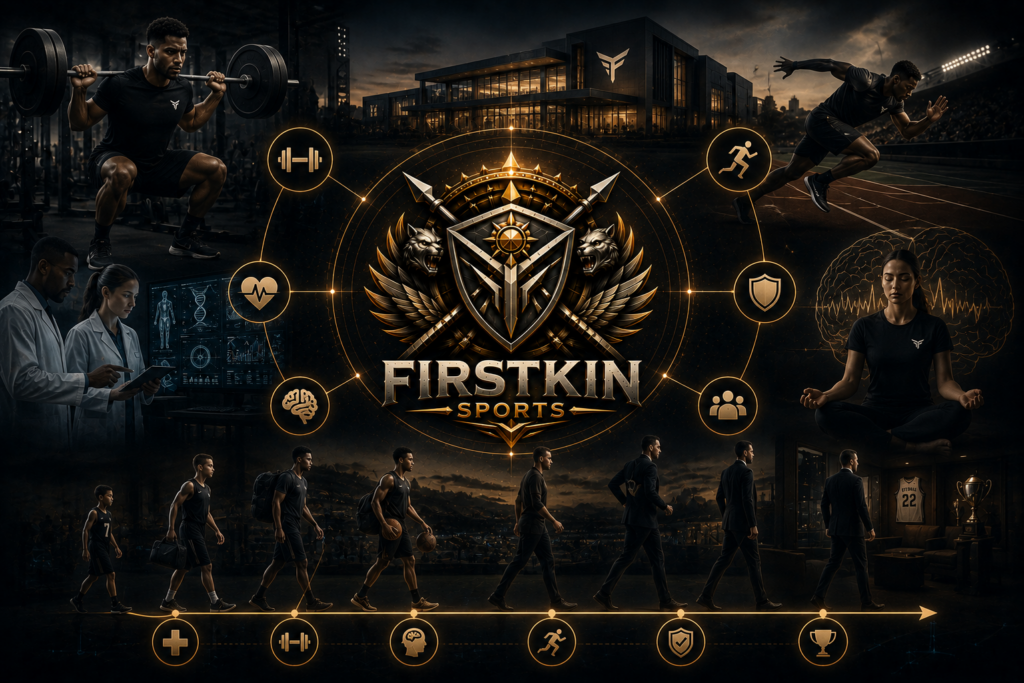
FirstKin Sports operates on the principle that athletic performance is not an event outcome but a long‑term condition.
Training is therefore treated as institutional infrastructure, not a seasonal activity or motivational program.
Our systems are designed to produce athletes who remain physically capable, psychologically stable, and competitively reliable over extended careers, not short performance windows.
Development Horizon
All training programs are structured across multi‑year horizons.
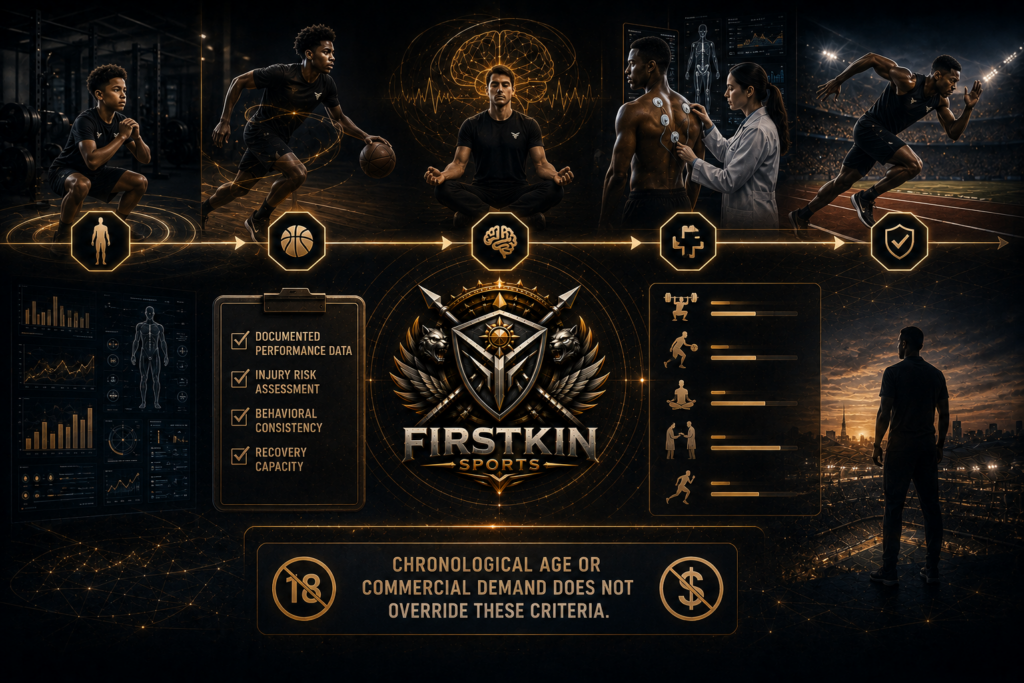
Athletes are developed through defined stages:
- Foundational Physical Formation
- Technical Specialization by Discipline
- Psychological Conditioning and Stress Regulation
- Medical Integration and Workload Governance
- Competitive Readiness Evaluation and Placement.
Progression between stages is determined by documented performance data, injury risk assessment, behavioral consistency, and recovery capacity.
Chronological age or commercial demand does not override these criteria.
Physical Training System
Physical preparation follows a layered methodology designed to prevent structural imbalance.
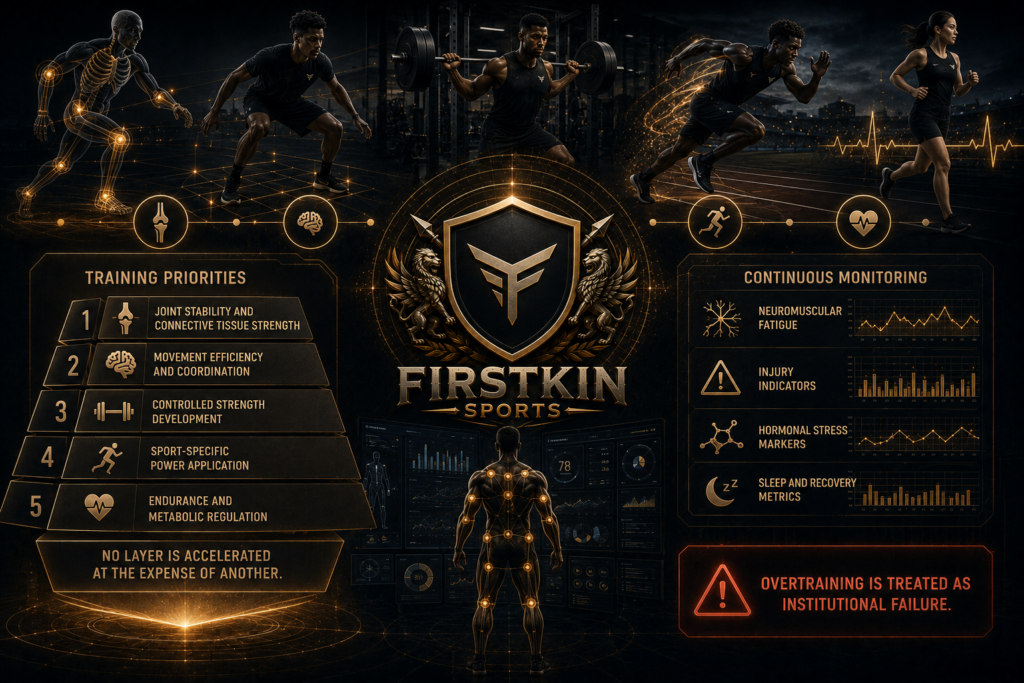
Training Priorities are sequenced as follows:
- Joint Stability and Connective Tissue Strength
- Movement Efficiency and Coordination
- Controlled Strength Development
- Sport-Specific Power Application
- Endurance and Metabolic Regulation
No layer is accelerated at the expense of another.
Training Loads are governed through continuous monitoring of:
- Neuromuscular Fatigue
- Injury Indicators
- Hormonal Stress Markers (where applicable)
- Sleep and Recovery Metrics.
Overtraining is treated as institutional failure, not athlete weakness.
Medical and Recovery Integration
Medical authority is embedded within training governance.
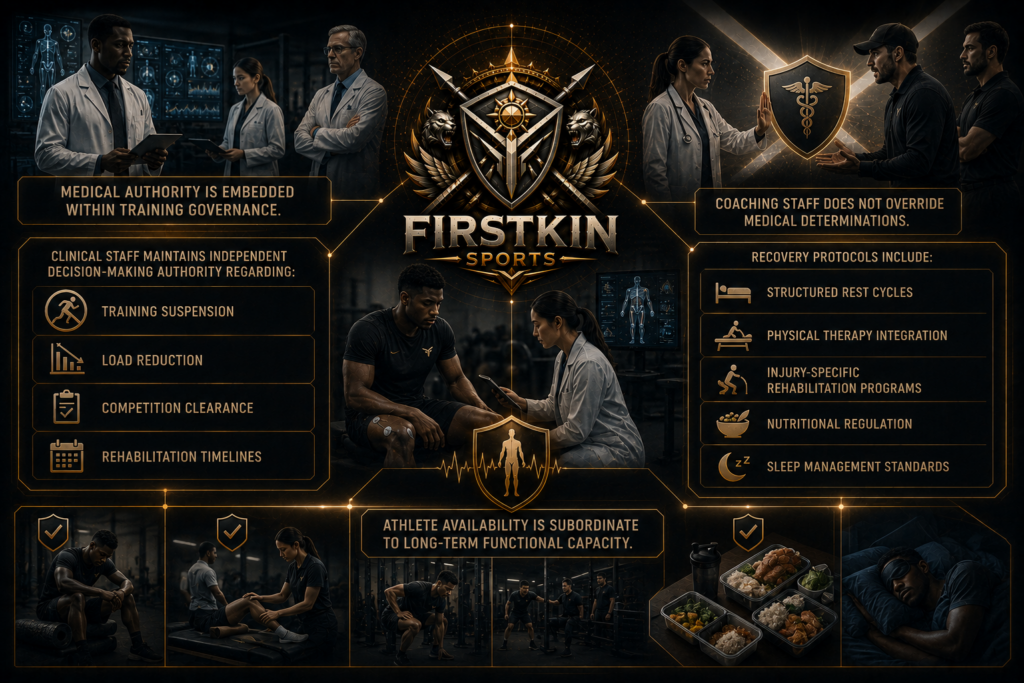
Clinical staff maintains independent decision‑making authority regarding:
- Training Suspension
- Load Reduction
- Competition Clearance
- Rehabilitation Timelines
Coaching staff does not override medical determinations.
Recovery protocols include:
- Structured Rest Cycles
- Physical Therapy Integration
- Injury‑Specific Rehabilitation Programs
- Nutritional Regulation
- Sleep Management Standards
Athlete availability is subordinate to long‑term functional capacity.
Psychological Conditioning
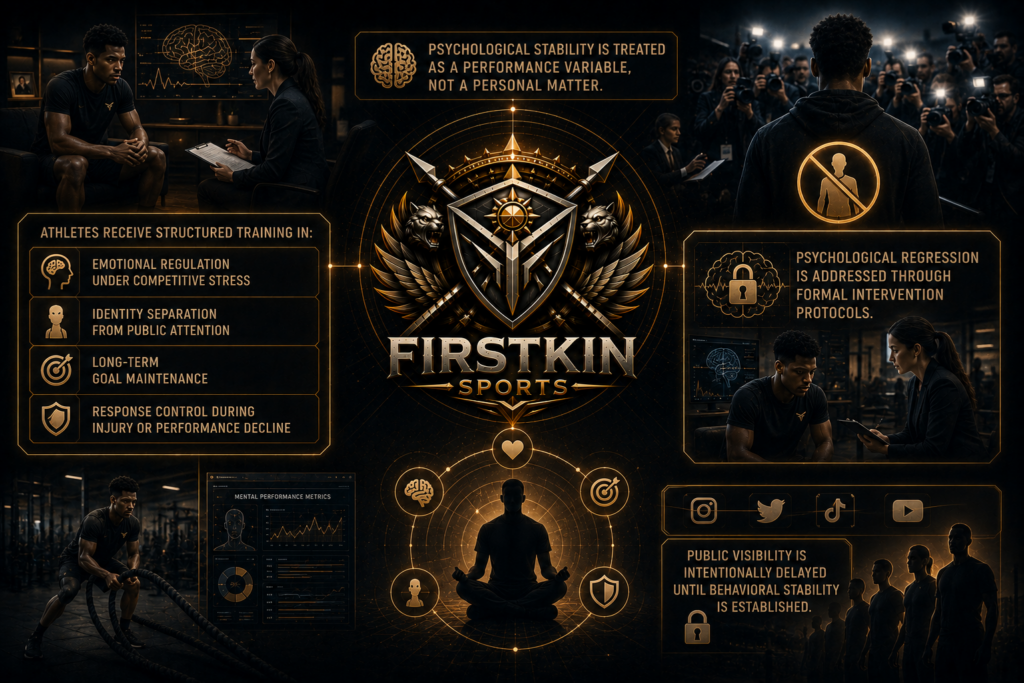
Psychological stability is treated as a performance variable, not a personal matter.
Athletes receive structured training in:
- Emotional Regulation under Competitive Stress
- Identity Separation from Public Attention
- Long‑Term Goal Maintenance
- Response Control during Injury or Performance Decline
Psychological regression is addressed through formal intervention protocols.
Public visibility is intentionally delayed until behavioral stability is established.
Discipline & Conduct Training
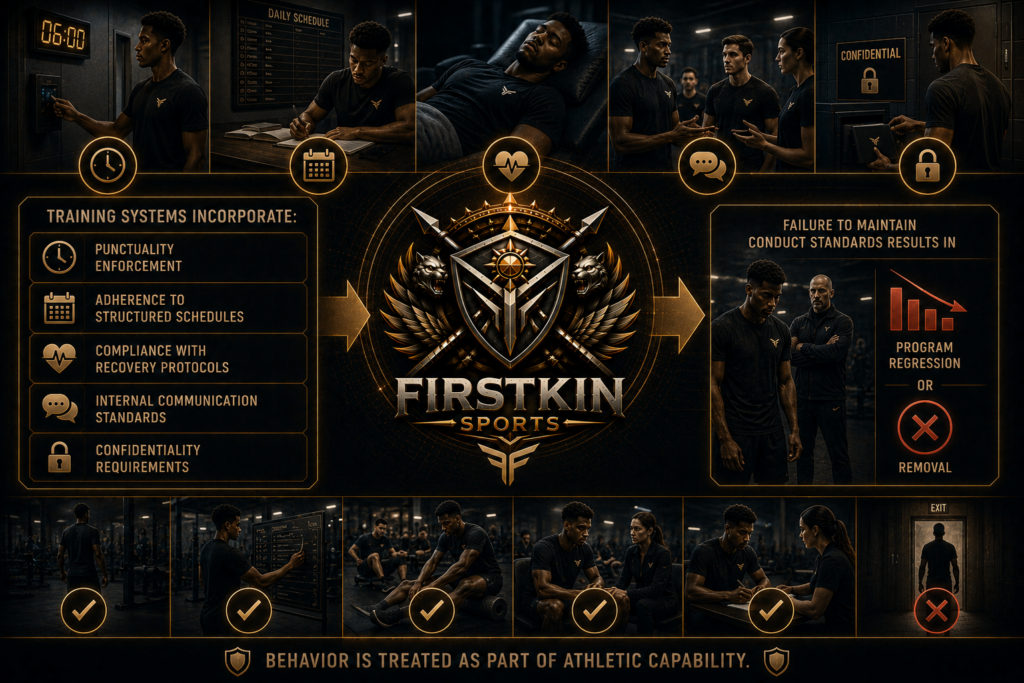
Behavior is treated as part of athletic capability.
Training systems incorporate:
- Punctuality Enforcement
- Adherence to Structured Schedules
- Compliance with Recovery Protocols
- Internal Communication Standards
- Confidentiality Requirements
Failure to maintain conduct standards results in program regression or removal, independent of performance metrics.
Training Environments
Training environments are designed to minimize external distortion.
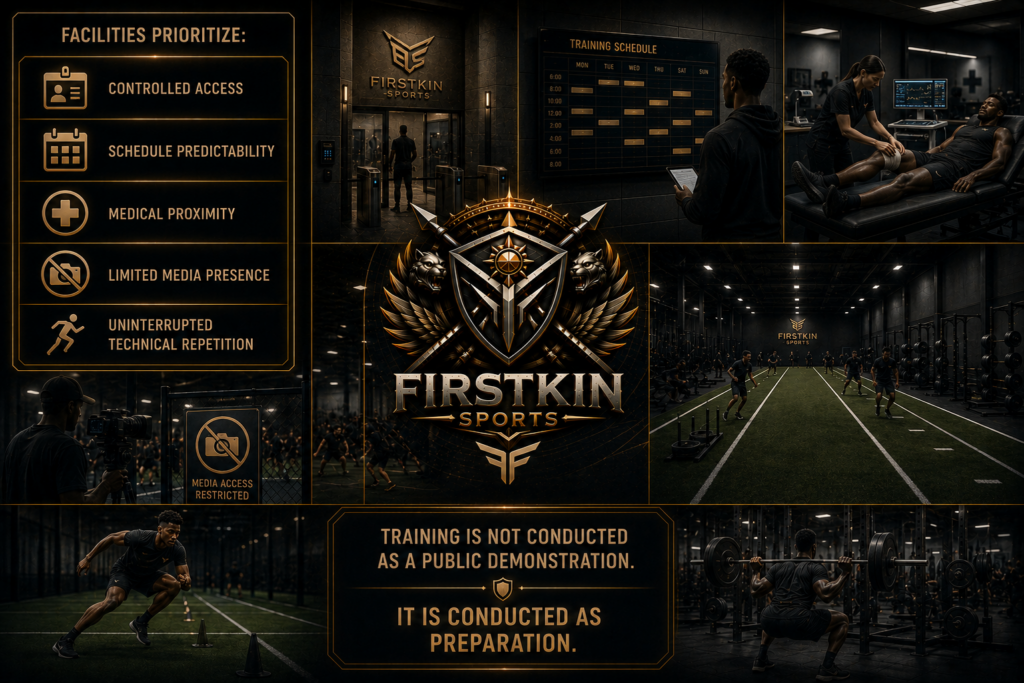
Facilities prioritize:
- Controlled Access
- Schedule Predictability
- Medical Proximity
- Limited Media Presence
- Uninterrupted Technical Repetition
Training is not conducted as a public demonstration.
It is conducted as preparation.
Institutional Philosophy
FirstKin Sports operates on the following assumptions:
- Talent is statistically common
- Discipline is environmentally fragile
- Long‑term performance requires governance
- Unregulated visibility degrades athlete stability
Accordingly, we treat training as a regulated system, not an individual preference.
Outcome Standard
The objective of training is not maximum output in a single season.
It is sustained competitive functionality over time.
Athletes graduating from FirstKin systems are expected to demonstrate:
- Stable performance under pressure
- Low injury recurrence
- Predictable recovery patterns
- Behavioral consistency
- Independence from external volatility
FirstKin Sports does not attempt to make athletes impressive.
It attempts to make them operationally reliable over long careers.